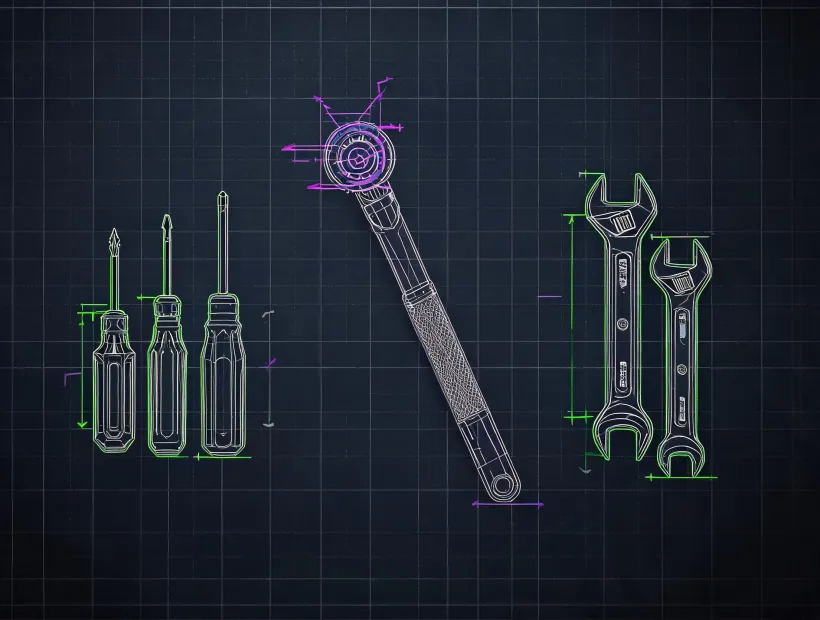
Size markings, assigned kits, and storage discipline reduce bench confusion.
Engineering blueprint
This page is an engineering capability path: before and after kit discipline, time saved through clearer selection, documented field outcomes, and a technical request form.
Plan it out
The demo layout reframes a savings calculator as a practical engineering worksheet. It helps supervisors describe lost time, repeated searches, damaged fasteners, and unclear tool ownership without making unverifiable performance claims.
Size markings, assigned kits, and storage discipline reduce bench confusion.
Tip match, torque range, and handle choice can be discussed before samples are ordered.
Purchasing receives a named list instead of a drawer photo or informal nickname.
Case studies
A control cabinet team separated insulated drivers from general bench tools, documented the most common terminal profiles, and created a shorter reorder list for new technicians.
Output: driver matrixA service manager grouped compact torque tools, hex keys, and bit holders by race support use, then prepared a travel case standard for repeat events.
Output: mobile kit mapA maintenance crew compared access angles, socket sizes, and machine cover routines before replacing a mixed cabinet with assigned Wera-compatible groups.
Output: maintenance rangeAn electronics bench documented Torx and slotted micro profiles, ESD handling needs, and bench labels so the tool wall could be restocked without guesswork.
Output: micro driver listEngineering request
Use the form to describe fastener profiles, torque range, insulation concerns, kit storage, and the number of operators. The engineering reply can focus on the path from technical requirement to catalog-ready list.